



Part Two
***
ETCHES IN TIME
The will is infinite and the execution confined. The desire is boundless and the act a slave to limit.
—Shakespeare, “Troilus and Cressida”
We are a restive species, driven by some natural tendency to want to outdo ourselves. It is an expression of the universal tendency Darwin described when he wrote, “As natural selection works solely by and for the good of each being, all corporeal and mental environments will tend toward perfection.”
Or maybe it is, as French philosopher J.B. Robinet suggested, a tendency unique to human minds, whose “destiny can be nothing other than to exercise imagination, to invent, and to perfect.”
In either case, the goal is unattainable. Perfect is like a vanishing point in painting — an imaginary point at infinity toward which every major course is directed. In math, it is called an asymptotic limit: an ideal that is approachable yet never realizable.
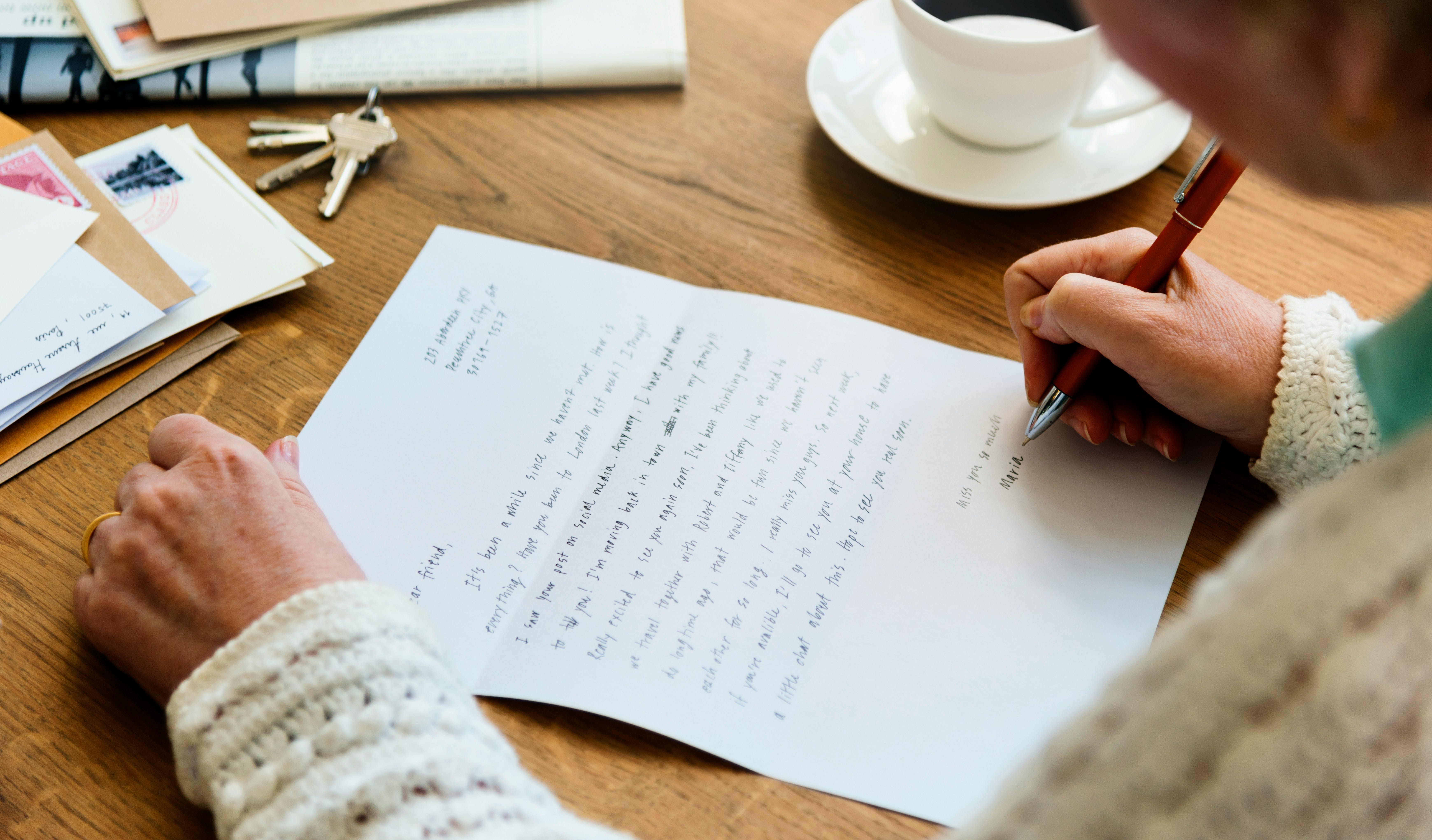
In the 20th century, handwriting was another place where perfection seemed important, in part because people thought one’s character could be improved by working on one’s handwriting. Alfred Binet, who came up with the Stanford-Binet IQ test, believed there was a “science of graphology” that revealed a person’s character in their handwriting. It is an idea still popular in Europe.
My third-grade teacher, Mrs. Taltavall, was a devotee. She took our penmanship lessons as seriously as she did every other content area. A large, florid woman, she stood in front of the class at the appointed time every day, like a dance master before a ballet lesson. She would sway back and forth, arms shooting up or dropping down like an airport ground-crew worker guiding a plane to its gate, as we followed her body language with our pencils. I liked the symmetry and challenge of getting the shapes “just right”… though “just right” never happened.
What did happen was more modest but far-reaching: I developed a love for the process and for the tools… fat pencils, thin pencils and later the fountain pens with their clever levers for loading ink. My girlfriends and I experimented… heart-dotted i’s, switching slants, adding self-conscious swirls and hooks. Mrs. Taltavall tolerated all but the last. Clutching her weathered copy of Milton Bunker’s 1939 book “What Handwriting Tells You About Yourself, Your Friends, and Famous People”, she warned that hooks betrayed an acquisitive and manipulative character.
It followed for us that we could improve our character by improving our handwriting. It was a residue from the 19th-century golden age of penmanship. In the 1800s, Platt Rogers Spencer lacked the money to buy paper, but his passion for handwriting was so great he practiced on leaves and bark, in the snow, and on the sandy beaches of Lake Erie, where his sometimes obsessive script would stretch for half a mile. People who followed him believed “they learned to train the mind by disciplining the hand.” Spenserian writing is gone now, living on mostly in the Coca-Cola Company logo. Once, it was the official style of government clerks and upper-class citizens.
Years later, I began to admire artist Thomas Eakins. He is best known for his paintings of taut rowers on the Schuylkill River in Philadelphia. What is less known about him is that his father was a master penman who would put the whole family to work during diploma season. Thomas was his protégé, and his lessons in script influenced his orderly approach to art.
It followed for us that we could improve our character by improving our handwriting.
It has influenced me too. Good handwriting is one of those civilizing achievements, like dressing or cooking well, that takes the work of necessity and saves it from becoming mundane. It may not reveal intelligence or personality type, but it does speak to an effort to be understood.
The cover of the Christian Science Monitor on September 19, 2011, proclaimed, “How Apple won over the world… It understood the power of being itself.”
Inside, one former employee says,
Apple has always been on a journey to be its best self… and enable their customers to be their best self too. Its greatest strength is its obsessiveness about everything. From how the stores are laid out, to design, packaging, the symmetry of their motherboard, their goal is perfection.
Penmanship and painting taught me perfection isn’t attainable. Penmanship class showed me practice counts. In painting, I learned vanishing points help organize space and depth, what is important and what needs to recede.
Practice. Organize. Soften. We have more choices than we imagine.


