



The thing, of course, is to make yourself alive.
—Sherwood Anderson
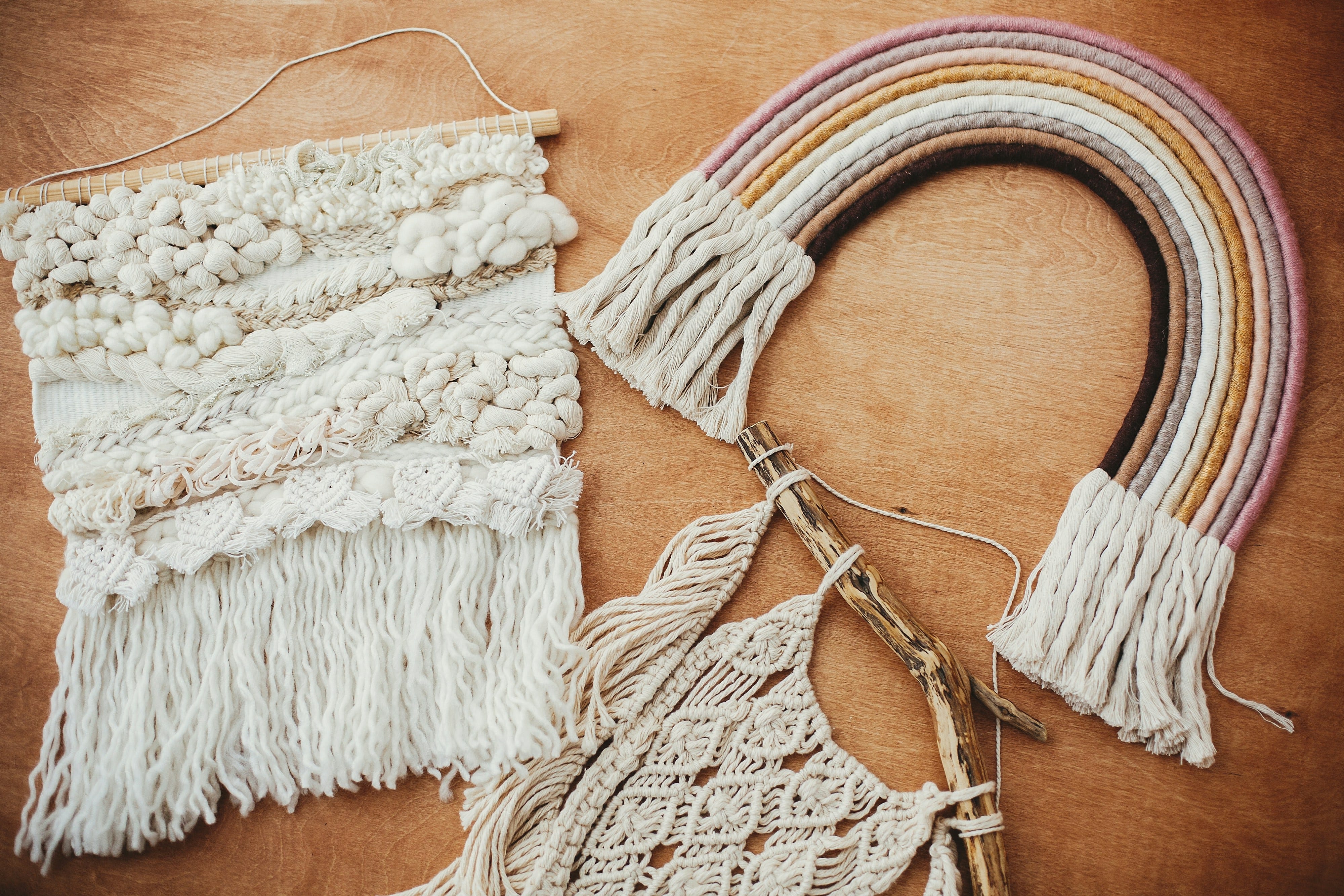
In spring of 1926 writer Sherwood Anderson wrote to his 17-year-old son, John, who was contemplating his future: “If I had my own life to lead over I presume I would still be a writer but I am sure I would give my first attention to learning how to do things directly with my hands. Nothing gives quite the satisfaction that doing things brings.”
There was a time I thought education was defined by majors and minors. Classes set down a map that would guide the rest of my life. “Doing” equated “school.” For someone like me, raised in a military family and often uprooted, school was both the answer to the future and a bastion against being the outsider in the present. I might not know anyone, but at least I understood public school. Books were the same everywhere. Heavy, shabby at the edges, official stamps on the inside cover above the names of the previous “owners.” Textbooks made me part of an invisible club.
It was no surprise I paid no attention to running a household or creating a home. In the subtle ways past generations shape future ones, Mother survived a childhood of drudgery compounded by poverty and parents with grade school educations. She wanted neither for her children. She ran the house. I studied. My much younger sister played. When faced with a home of my own, the shock was electric. I had no idea what to do.
If school didn’t prepare me for household life, it did leave me with something — the discipline to structure my time toward a goal. Turning empty rooms into welcoming spaces was my first focus. In a dozen homes through my adult life there have been plenty of spaces to fill.
Aristotle said that all people by nature desire to know. I wanted to learn everything about homemaking. I hooked rugs using a latch hook hinge. Pulling the yarn through stiff burlap and knotting the back I was “channeling” a craft that hadn’t been popular in America for 200 years. I didn’t care.
Originally made from scraps left in English weaving mills, hooked rugs were part of what wealthy women called “the thumb craft of poverty.” After 1830 rich people preferred machine made floor coverings. I could hook and watch children at the same time. Both grew. It was easier to measure the progress of the rugs.
The designs captured feelings I wanted around my fledging family. One large beige and brown landscape, with a burnt orange sun sinking at the horizon, was the view from our New Mexico apartment every evening. In art horizontal directions are quiet, calm, restful. The rug was a wish.
No sooner would one rug be completed than I would plunge into another. Starting and finishing imposed a frame on time, something I missed after years of school bells. In a later project there was a birch grove in the snow, a yellow moon rising behind slashing diagonal branches and vertical trunks. Diagonals create movement, verticals stability and strength. The rug was a prayer.
Still later there were stenciled canvas floor cloths with repeating fruit and flower motifs bordering colorful center patterns. Those too had fallen out of style, replaced by linoleum at the end of the 19th century. The house was a kind of history laboratory. No part was exempt. There were countless sets of cross-stitch pillowcases, tiny dough flower arrangements, unfortunate pipe cleaner turkey centerpieces, gaudy Christmas stockings, Ball mason jar candle holders, corn husk dolls and holiday ornaments.
For two or three messy years there were macramé curtains and wall hangings, plant holders, even intricate necklaces — all in various states of knotting, strung everywhere. The dining room table disappeared beneath piles of cotton, hemp, yarn and beads. The projects were all descendants of 13th century Arab weavers. The techniques had made their way to England in the 1600s. I started large window coverings on wooden dowels. Dozens of cords snaked across the room. It was a process rather like doing an old fashioned Maypole dance by yourself. The craft hadn’t been popular since the Victorian era, when “Sylvia’s Book of Macramé Lace” topped the bestseller list in 1882. I was undeterred.
In a later project there was a birch grove in the snow, a yellow moon rising behind slashing diagonal branches and vertical trunks. Diagonals create movement, verticals stability and strength. The rug was a prayer.
It was humbling to glimpse how hard earlier generations worked, not only in factories and on farms, but also in their domestic pursuits. I began to understand the pattern of my work as a set of eccentric circles. In geometry they are circles nested inside one another, where one contains the center of them all. The projects were many. The shared center was making a home…literally.
In the introduction to Bill Bryson’s history of private life, “At Home,” he says,
…whatever happens in the world — whatever is discovered or created or bitterly fought over — eventually ends up, in one way or another, in your house. Wars, famines, the Industrial Revolution, the Enlightenment — they are all there in your sofas and chests of drawers, tucked in the folds of your curtains…in the paint on your walls. Houses are refuges from history. They are where history ends up.
The children grew. I returned to what society called “work”; that is, work outside the household. It is a peculiar distinction, suggesting life at home isn’t work. In both places activities are sometimes creative, often mundane. Both have their share of boredom and stress. But only one has a salary. For many years I apologized for the time I spent at home. I no longer do. It’s the old Gatsby spin: the light through the windows is always more enchanting when viewed from the street outside.
In art making one line longer and wider than the rest will create a dominance of direction, which unifies a painting. The dominant line unifying my life grew wider because of my years at home — something I didn’t expect. I benefited from my formal education — the rigors of classwork, the discipline of study — but I learned equally valuable lessons from the process of creating a place for family. Walking though my house today it has become a home. Not because of the things I made. Because of the memories attached to them.
In the spring of life I practiced arts and crafts of earlier generations. It is autumn now. Thomas Wolfe was right when he wrote:
All things on earth point home in old October; Sailors to sea, travelers to wall and fences, hunters to field and hollow and the long voice of the hounds, the lover to the love he has forsaken.
Careers end. Memories fade. Homes last. In our hearts.


