



The history of art is the history of revivals.
—Samuel Butler, 1835-1902
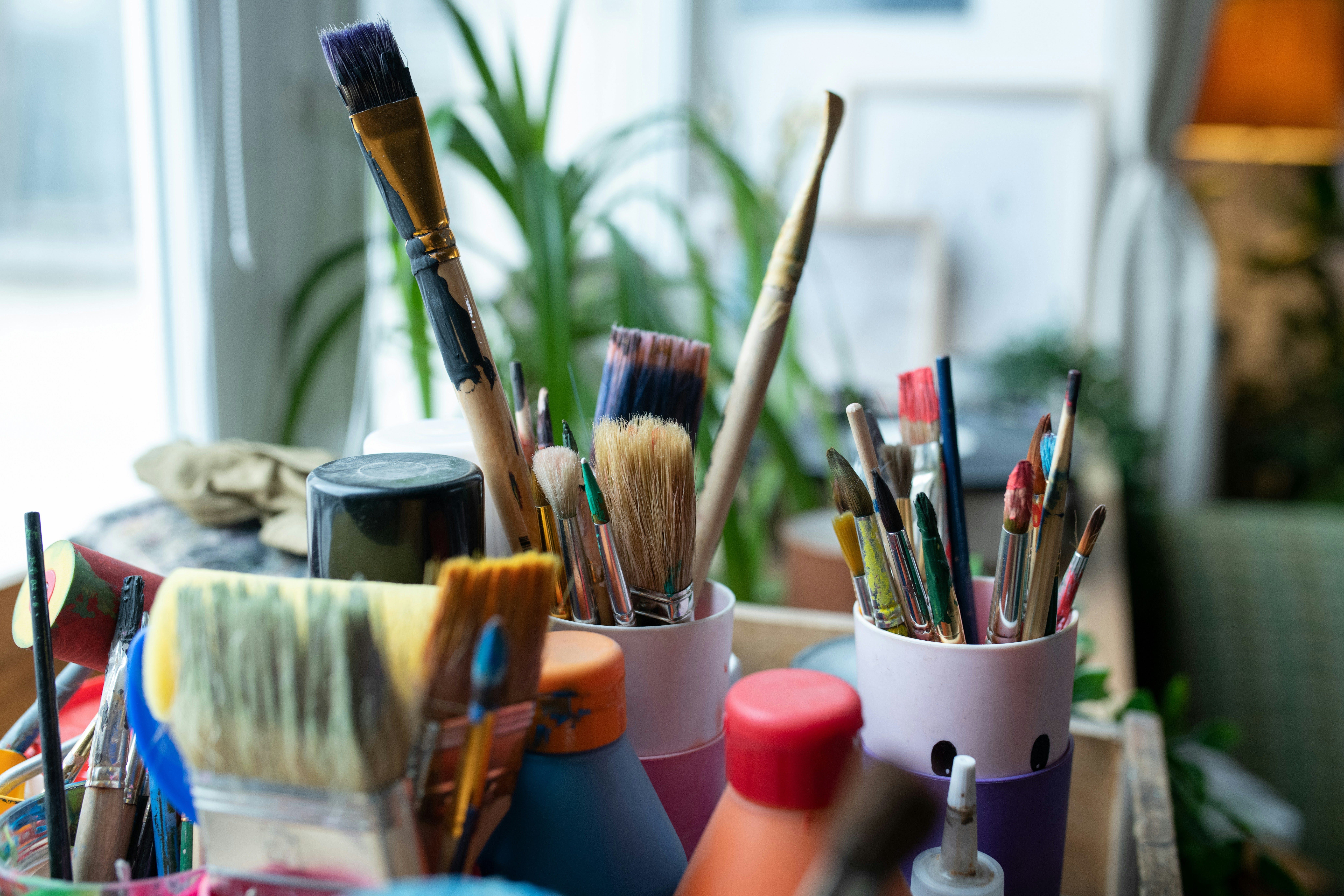
The unassuming white clapboard house on a busy street had a small sign over the door — “Painting Classes and Supplies.” Below it, a cheerful banner whipped in the dreary northwest rain. “Free Demonstration Today” wiggled back and forth in the wind. Leaving the gloomy wet behind, I stepped across the threshold into a world as colorful as the one Dorothy found in Oz. Nothing was ever quite the same again.
The presenter, a chatty dark-haired woman, looked more like a suburban hostess than the forest ranger’s wife she was — a person who began decorative painting during 10 years of remote Alaskan tours. Oregon wasn’t Alaska, but I could identify. I, too, felt isolated and lost in a new place with not a clue how to decorate a home or much money to spend on the process. Loneliness doesn’t depend on geography.
Her voice rose and fell as she talked about the American craft movement and swiped color on the wood and metal objects around her at the same time. William Morris, inventor of the Morris chair and founder of England’s 19th-century arts and crafts movement, had inspired Americans of modest means to take the decoration of their homes and furniture into their own hands. By the end of her demonstration, her paintbrush coaxed several simple objects — a ladle, a wooden shoe, and an oven rack pull — into a life beyond functionality. It was like watching the mice transform Cinderella’s drab second-hand dress into something that was still a dress, but a prettier one.
I wondered if it could do the same for me. Could I be more than a caregiver, housekeeper, cook, gardener — important jobs, functional jobs, exhausting in their relentlessness? Jackson Pollock characterized art as an act of “self-discovery,” positioning the experience of the individual, not the work, at the center of the endeavor. I didn’t need to be the center of anything. I needed something else. Tole painting became that something. It helped me develop an undiscovered corner of my life... a corner where there were fewer obligations and more uninterrupted hours. A creative place. A quiet place.
Elizabeth von Trapp, granddaughter of Maria and Baron von Trapp, says about her own musical career, “Music has given me a place to be.” I felt the same about my plunge into decorative arts. They weren’t so much a “place to be” as “another place to be.” I took evening classes up and down the Willamette Valley — anywhere traveling teachers were demonstrating new techniques or interesting projects. Over time, I painted butter churns, ornate plaques, wooden shutters, lap desks, clock faces, jewelry boxes, towel racks, metal pitchers, ladles. I would eye any stationary object and wonder if it would look better painted. Our once-empty house morphed into a vista of cluttered walls and crowded counters — testimony to my enthusiasm, if not skill. I joined generations of ordinary people who found ways to brighten their prosaic days with colors and patterns sprinkled amid life’s daily routines.
Loneliness doesn’t depend on geography.
Ten years later, Oregon became part of our past. I kept a dozen or so wooden tole projects. Beyond the designs — cherries, gooseberries, pears, grapes, ornate Scandinavian florals — was a less obvious lesson I learned from preparing the wood. The more time I spent on the unglamorous, dirty work — stripping, sanding, staining, sealing — the better the finished piece. Shortcuts never worked. The paint flaked, the wood grain interfered, the brushes lost their shape whenever I rushed. Today, a lifetime later, when the speed and demands of contemporary living make it easier, faster and cheaper to buy things rather than make them, I often wonder: What are the hidden costs of our shortcuts?
In the preface to “Collected Poems,” Robert Frost wrote that a poem... begins in delight and ends in wisdom. It inclines to the impulse, it assumes direction with the first line laid down, it runs a course of lucky events, and ends in a clarification of life — not necessarily a great clarification, such as sects and cults are founded on, but in a momentary stay against confusion.
Folk art painting works the same. In the loneliness of a new place, terrified at the responsibilities of parenting, uncertain of the path, painting became an anchor to the past, a marker for the present, an unspoken wish for home. Life unfolded. There were other cities, other homes, other lives to live. When I returned to teaching high school, my paint box was relegated to the garage. Every fall, I rummaged through it to find a worn piece of sandpaper to tack on the classroom bulletin board. It was a reminder from my painting days… take time.
It pays off. In painting. In teaching. In life.


