
What do ‘progress’ and ‘better’ really mean?
—Bill Buxton, Principal Researcher, Microsoft Corporation

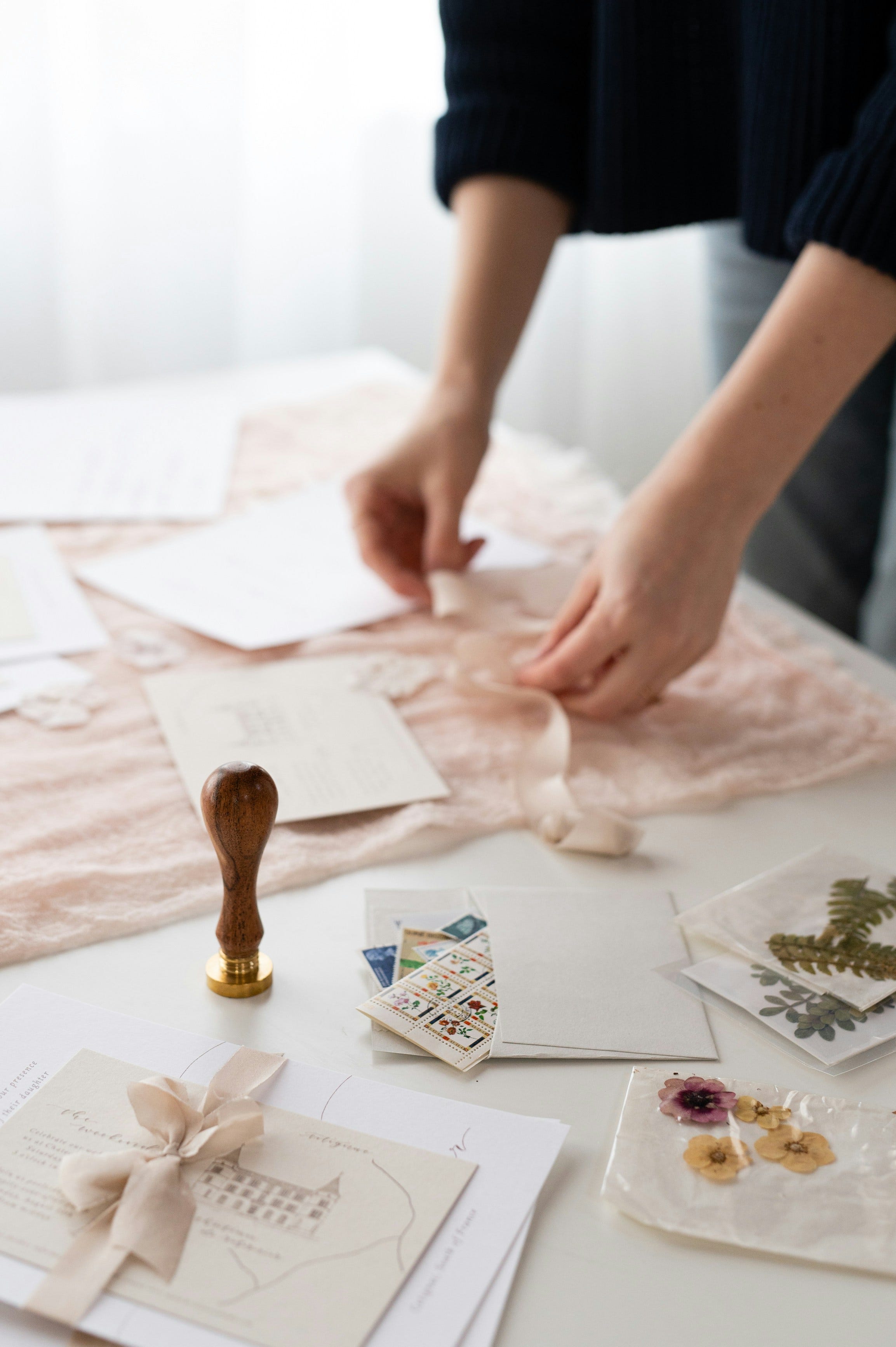
For 20 years, I have lived in a house with a laundry room—a big laundry room. Floor-to-ceiling cupboards wrap around three sides. A deep sink interrupts the tile counters that end where they meet the washer and dryer. Nevertheless, doing laundry there is a challenge. Stacks of greeting card supplies are everywhere—rubber stamps, ribbons, buttons, pressed flowers, cutters, reams of paper, strange devices for crimping, coloring pads, embossing guns, packing tags, cancelled postage stamps.
The middle of the room is filled with a table loaded with artist palettes, an Ott-Light for seeing close detail work, back issues of porcelain painting magazines, white china, and mismatched bottles— mineral oil, turpentine, alcohol. A trash can filled with old wrapping paper and discarded road maps tilts against the wall. A matted wool dog bed takes up the rest of the floor. The appliance surfaces are covered with cards in various stages of assembly. The washer lid is invisible. How did this happen? One conversation.
***
In math, a non-linear system is one where output is not directly proportional to input. Most physical systems are inherently non-linear in nature. Weather is one example. Simple changes in one part of a pattern produce complex effects over thousands of miles. The same holds true for human interactions. It’s how my card-making interest began in earnest.
In the crowded, messy trailer that was the high school faculty room, I dropped my satchel on my desk at the end of a long teaching day. One of my favorite colleagues was muttering about how much he disliked the commercialization of holidays and the expectation to send cards. It was May in the mid-1980s, and Mother’s Day was on his mind.
“Have you bought a card for your wife?” I asked. He launched into the reasons his answer was, absolutely NOT. “It’s all a Hallmark plot.” Not wanting to argue, I changed the subject. But I didn’t forget the conversation.
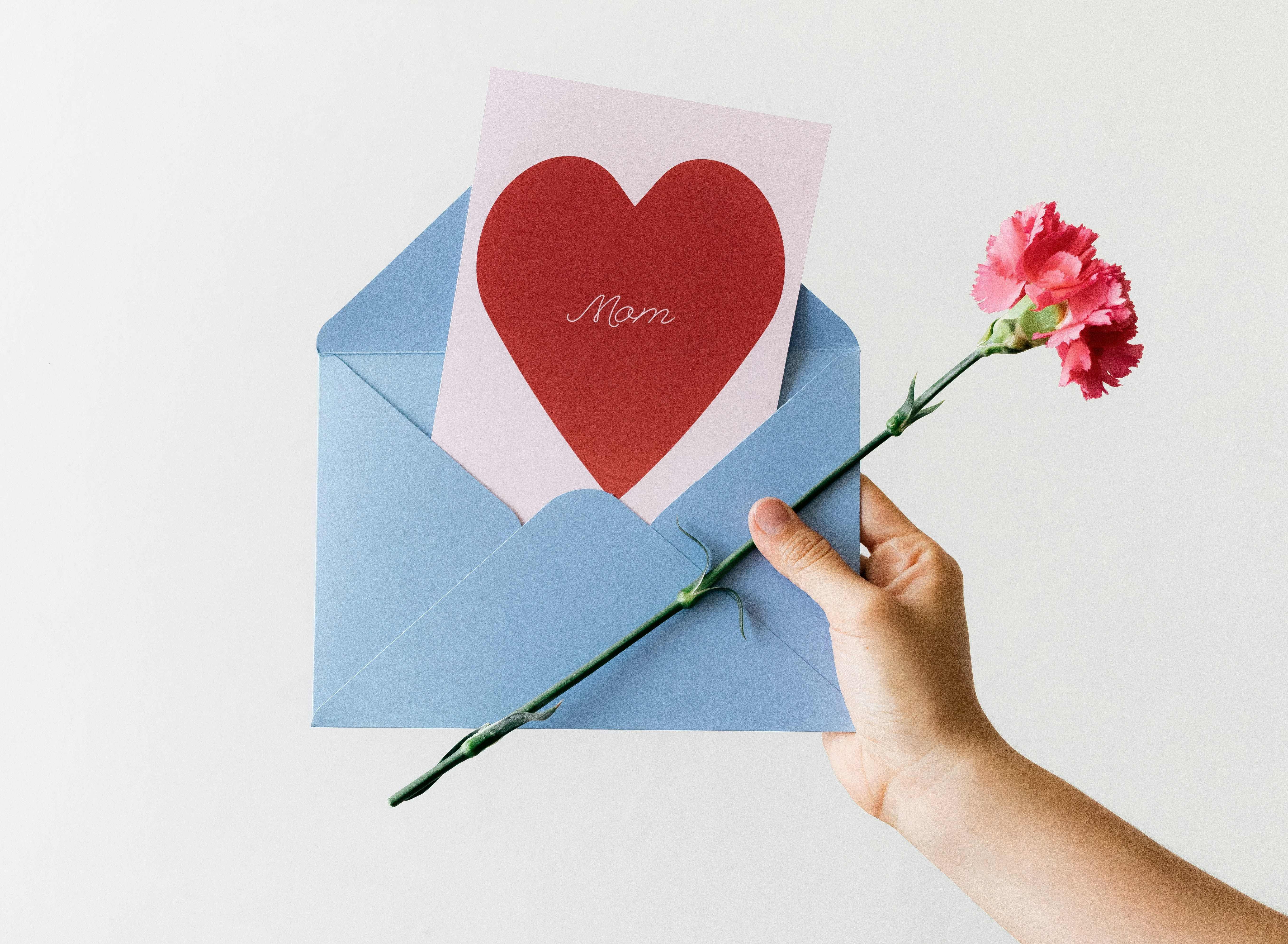
He did have a point about commercialization, but Hallmark was not to blame. People have been marking special days, for mothers and others, since the Egyptians held festivals for the goddess Isis, the mother of the Pharaohs. I often told the story to my high school students of Julia Ward Howe’s Mother’s Day Proclamation in 1870. She was so distraught by the carnage of the Civil War she called for mothers to unite against such violence against everyone’s sons. By 1914, Mother’s Day was an official holiday. Since I always have felt parents in general are underappreciated, it was a holiday I liked. But my friend was right about one thing. Cards were getting more expensive, as though price equated sentiment. I decided I could make Mother’s Day cards for my mother and mother-in-law. They would be less professional-looking, but more personal. How much time could it take to make two cards?
***
I finished the cards, sent them off, and realized how engaging the process had been. Making them gave me an extra few minutes to think about my mother and mother-in-law. I liked it—both the thinking and the doing. Maybe I could make more cards. There are lots and lots of holidays. “Chase’s Calendar of Events,” the definitive book on the subject, lists more than 12,000. That was out of the question, but I figured if I left the supplies out, I could make cards whenever I had a few moments. As soon as we moved into a house with a big enough laundry, I was set. No one bothered my work. If there was one place in a house where my children and husband never went, it was the laundry room.
***
The popularity of handmade cards began with a Massachusetts woman, Esther Howland, who began selling handmade valentines in 1849. By the early 1900s, they fell into decline, only to reemerge after World War I. By the 1980s, as I was getting interested, “alternative” cards, sent for no special reason, were beginning to appear. The timing was perfect—I didn’t need a reason to send cards and now, making my own was appealing.
By the late 1990s, card-making and its cousin, scrapbooking, were enjoying a surge in popularity. I passed three shops selling supplies and offering classes on my daily commute. I began to sign up for evening workshops at a busy, cheerful store. Stamper’s Warehouse, with its two classrooms always in use, aisles of supplies, and fleet of teachers, both local and traveling, was a mecca for women from all walks of life. At night, I met nurses, lawyers, teachers, office managers, bank tellers, housewives, women caring for elderly parents during the daytime, wealthy matrons, grocery clerks, hairdressers. Some wanted to make cards to send to troops overseas. Others wanted to sell what they made. As different as they were, they loved the creative process. So did I.
Handling the paper, watching the instructors demonstrate composition techniques, and listening to my classmates at the long, cluttered worktables sometimes was the most satisfying part of my day. It is very hard to tell if what we do as teachers or parents or even friends actually makes any difference. So much is elusive. Card making is a lot of things, not the least of which is, it’s tangible.
***
Richard Banks works for Microsoft Research in Cambridge, England. His title is “Interaction Designer” in the Computer Mediated Living Group. Most of his job is searching for ways to make digital things feel richer and more dynamic. His group is trying to create interfaces that fake gravity so we can turn them, flick them, and play with them as if they were real objects at the end of our fingertips. In his book “The Future of Looking Back,” he says, “The uniqueness of physical objects (as opposed to digital) makes them more fragile and, I admit, more meaningful.” Banks begins by describing going through his deceased grandfather’s battered suitcase with its collection of 200 photographs and cards that were special to the 94-year-old. Banks is 42. He figures at his current rate of taking about 5,000 photos a year, he will be leaving behind 200,000 images for his family… if they can find them.
Columnist George Will says cell phone cameras are so inexpensive and ubiquitous that photography has become a form of fidgeting. Facebook users upload 7.5 billion photos every month. The sheer volume reminds me of a poetry professor I once had who observed that if it took someone hundreds of pages to get their point across, they didn’t have one. I suspect Richard Banks knows that, too.
***
From the original two cards I’ve expanded to about 500 cards a year—a surprising non-linear outcome from one conversation. I give many as gift sets, and send the rest. The card-making supply stores are gone now, victims of a fickle economy and a world in which digital is the medium of communication and design. I include with my gift boxes a note that says, in part:
I make my cards with many recycled items. My favorite embellishment is cancelled stamps with their special stories and mysterious travels. I like to think they are part of a long journey of connection, weaving back and forth through time. W. H. Auden captured this movement in his 1941 poem “Night Mail”:
This is the Night Mail crossing the Border | Bringing the check and the postal order. | Letters for the rich, letters for the poor, | The shop at the corner, the girl next door... || Letters of thanks, letters from banks, | Letters of joy from girl and boy, | Receipted bills and invitations | To inspect new stock or to visit relations, | And applications for situations, | And timid lovers’ declarations,| And gossip, gossip, from all the nations.
I hope you enjoy sending these cards as much as I enjoyed making them for you.
Combining simple objects, connecting past to present, capturing cast-offs for new uses, leaving something for the future.
Border crossings.