



I am lost in a snowstorm. One of my companions assures me that he can see lights in the distance and that there is a village. But it is only a delusion, which we believe because we choose to do so.
—Tolstoy
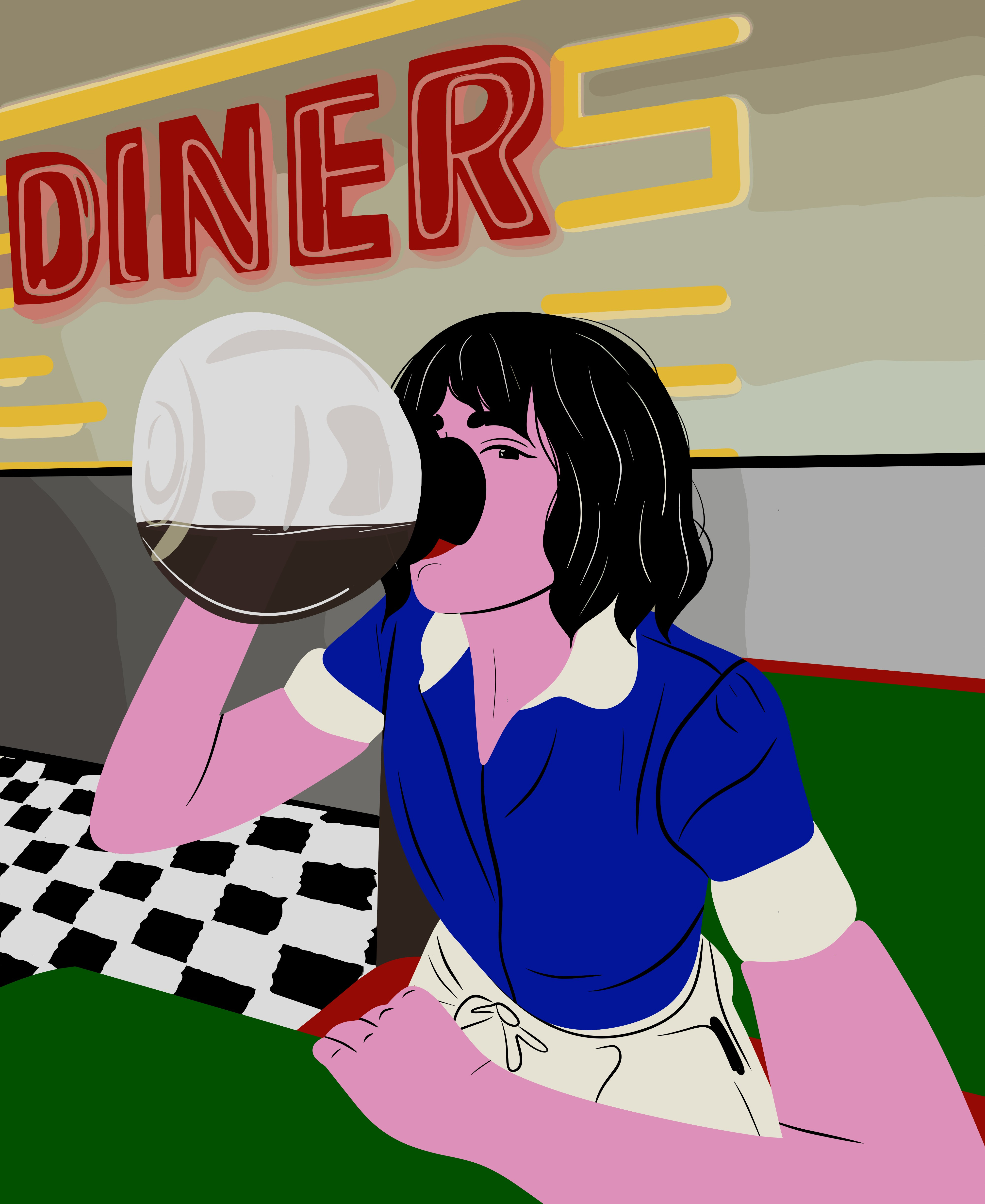
There were three distinct reasons I knew I wasn’t in a San Francisco restaurant. The single question was which was most important.
The first was the wooden boxes stamped “AMMUNITION” lining the corridor to the dining room. “Dining room” didn’t quite fit, unless scarred floors, metal tables, mounted animal heads, and a makeshift corner bar count.
The second was the menu. Printed across the top it said, “We are truly in the Middle of Nowhere,” which was the name of the 800-acre “Resort for the Outdoor Enthusiast” surrounded by hundreds more acres of corn and soybeans where we were. A map on the reverse side underscored the claim. No towns in sight. No freeways. The address: Highway WW, Harris, Missouri. The telephone number: 660-794-LOST. Many San Francisco restaurants have names you can’t pronounce, much less understand. “The Middle of Nowhere” was in the middle of nowhere. They got that right.
The food choices ran to fried. Fried chicken fingers. Fried spicy pickles. Fried cauliflower. Fried gizzards. Featured specialties — all beef. Roasts. Steaks. Meatloaf and mashed potatoes. Ham and beans cost $4.00. Mac and cheese $1.50. Many San Francisco restaurants charge those prices for water.
The clinching reason was a practical one. The waiter was wearing a loaded gun. Since we were sitting and he was standing, I was eye to eye with his holster. I’d seen a lot in my life. The move into our current California house was my 26th relocation. Then there were all the business and holiday travel excursions. This was a new experience. Forget the food. Every negative stereotype about guns popped into my head. Ideas are hard to change. My trips to rural Missouri became a high point once I stopped peering through preconceived, rusty biases.
***
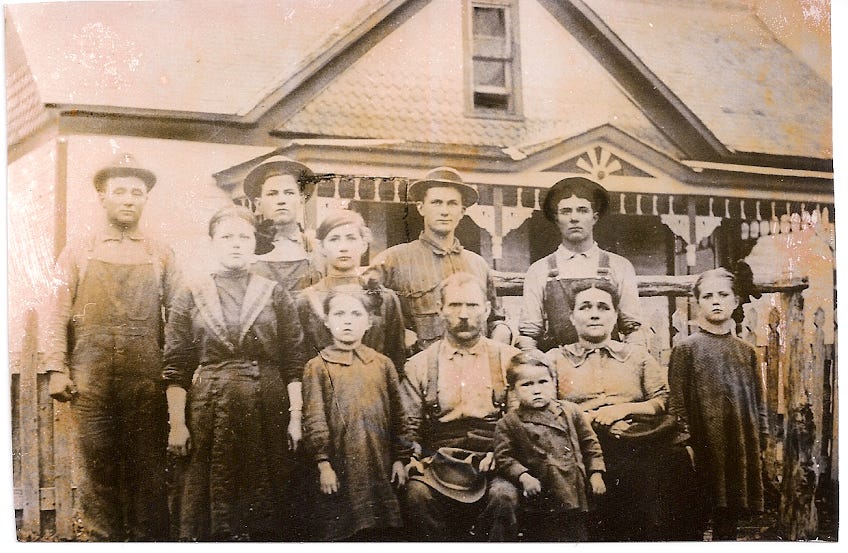
On May 20, 1862, Abraham Lincoln signed the Homestead Act, the federal law that gave applicants up to 160 acres of undeveloped land outside the original 13 colonies. 1.6 million homesteads were settled, requiring only a simple three-step process: file an application, improve the land, and register a deed. One of those homesteaders was William Clark Ayers, my great-great-grandfather.
A Civil War veteran, he built a house high on a northeast Missouri hill overlooking Spring Creek in Sullivan County. There he set about raising three daughters and four sons. One of those sons was my great-grandfather, for whom my father was named. Dad left home in 1939. He returned only once the next 60 years.
***
My sister, in Kansas City on business early in 2000, decided to rent a car and drive the 180 miles north to see the place where our father had grown up but rarely talked about. There she met a half dozen of Dad’s cousins, all of whom missed him at their annual September reunions at the Ayers farm — 330 of the original 900 acres, the house and two barns, meticulously restored by the wealthiest of them. Her trip was the catalyst he needed.
Thus began a surprising journey of reconnecting with Missouri — the family left behind, the places that shaped our father, the joy of retracing our roots to a miniature cemetery above a sturdy red barn built by my grandfather in 1911. Among the worn headstones one, barely legible, reads, “W.C. Ayers — December 2, 1813 – August 2, 1884.”
Charles Movelli is one of our best living plein air artists and teachers. Famous for his town landscapes and coastal view painting, he lives part of the time in Maine. For some years my fall routine has included trips to Missouri and Maine — the first for pleasure, the second for business. Sitting in the middle of nowhere, I thought of Movelli. He says, “On the face of it, the easiest of all things should be seeing what we see. In reality, it’s the hardest.” Loving coastal Maine is easy. His work captures its beauty, energy, vitality. Rural Missouri looks different. Beyond the quiet panoramas is the same vitality — harder to see but there — in the faces, in the hands. When I concentrated, I saw a world I grew to love. Not the guns. The people. Art teaches people to see. At least it taught me.
***
When a cousin expected at the family reunion in the nearest “city” — population 687 — was late one year, she explained, “There was a rattlesnake between me and my truck. I had to get my gun.” Farmers and ranchers need guns. The more we visited, the more I understood.
Joyce Ayers, the relative with the rattlesnake problem, lived alone on a farm that seemed as isolated as the hunting and shooting range where we had eaten. Widowed early, she raised her family, farmed, and began to paint. “I always liked drawing and painting. When my husband asked me to paint his bird dog, I was hooked,” she said. Her love became a business. “Wildflower Studios” is filled with paintings she sells online, at fairs, in galleries. Her picture of her grandson sitting in a field on a hay bale is in an exhibit at the state capitol. A painter in a tiny corner of Missouri is something else I didn’t expect to find. Farmers and ranchers are more than farmers and ranchers. I wonder why I ever thought otherwise.
***
Until painted china has been fired in a kiln it is not complete. The heat matures the mineral colors and binds them to the porcelain. Manipulating kiln heat, which ranges to 1940°F, requires learning what happens at different temperatures to different colors, how to stack projects, how fast to heat the chamber. China designs often take as many as five or six firings.
My father bought my first kiln. Opening it after a firing is like opening a package — exciting. When I finish a design in three fires I feel victorious. One December I took a workshop with a well-known painter, the longtime president of the California Association of Porcelain Artists. The subject was holly.
As she demonstrated, she said, “This is a one-fire piece.” One-fire piece? China is supposed to take multiple firings. The teacher explained, “If you mix paint to a creamier consistency, restrict your palette, work from background to foreground instead of what we normally do, and pay attention to details, one-fire pieces can be lovely.”
I was skeptical. That’s not what I was taught. Every December when I unwrap the holiday vase I think of the many things I have “unlearned.” Unlearned about Missouri. Unlearned about painting. Some pieces take many firings. Some don’t. Some mistakes can be fixed. Some need to be wiped off — no matter how long I’ve worked on them.
A veteran painter in my class would sometimes throw up her hands in frustration, wiping off hours of work. Muttering to herself, she would say, “It’s only china.” Then she’d plow back in. It was a great deal more than china — it was resilience.
There’s a good word for this kind of unlearning — “disenthrall.” Mark Stevenson, author of “An Optimist’s Tour of the Future,” borrows it from Abraham Lincoln, whose 1862 message to Congress speaks of disenthralling ourselves of “the dogmas of the quiet past” in order to “think anew.”
Stevenson’s pragmatic attitude about the future doesn’t belong exclusively to Silicon Valley, or New York, or Brooklyn, or Los Angeles. I see it in unexpected places. Rural America. Suburban America. Art schools. Craft classes. All trying new materials. New techniques. New ways to achieve outcomes. Stevenson quotes biotech entrepreneur Juan Henriquez: “Attempting to hold on to something by trying to fight against something that humans do best — evolve through culture and technology — is a contradictory and ultimately futile course of action.”
I would put it another way. We are always on a path, never at a turning point. We just think we are. My Missouri relatives have weathered 150 years of change — one step at a time. Porcelain painters continue to experiment, using advances in chemistry to improve paint, advances in technology to improve kilns.
***
I asked my painting cousin if she was lonely. She paused. “I’ve lived on farms all my life. The country isn’t lonely. It’s home. I choose not to live in the past. I’m taking a painting class online from a Canadian artist. I’m learning a lot. Besides, it’s spring calving season. New beginnings. And my faith gives me hope.”
I will never get used to the menu at the Middle of Nowhere. That’s okay. The food may not work, but the people do. People who are complex, self-sufficient, and resilient. It’s hard to give up biases — social, political, artistic. I won’t give up multiple firing — but I appreciate what single fire can do. I’ve begun to experiment. I painted a set of one-fire plates based on images from Missouri fields — sunflowers, thistles, wheat. They don’t look like the work of people I have studied with. They’re my own.
Winslow Homer knew. He said, “When you paint, try to put down exactly what you see. Whatever else you have to offer will come out anyway.”
If Lincoln had looked back instead of forward, my ancestors wouldn’t have come to Missouri. I’m glad he didn’t.
My long journey with art began in the past. I see lights in the future now. It’s not the delusion of Tolstoy’s village in the snowstorm. It’s the luminosity of resilient people — city people and country people. Art taught me to appreciate both.
I had rather be on my own farm than be emperor of the world.
—George Washington


