



I am always doing things I can’t do. That’s how I got to do them.
—Picasso

December clocks have a different rhythm. Instead of a measured analog tick-tock-tick-tock, they move at the speed of my digital kitchen timer—numbers tumbling by in a blur. Every year, Christmas comes sooner. I love Christmas. I love “keeping” Christmas. Why was it becoming more difficult? I pushed the nagging question aside until one recent year when the invisible elephant materialized on Christmas Eve—unexpected, unwelcome, and unavoidable—impossible to ignore any longer.
We celebrated Christmas at home, ever since navigating 600 miles between our two families became untenable with small children. Christmas Eve in northern California, Christmas Day driving to San Diego, Christmas lunch at the Bakersfield McDonald’s—not a good idea.
I invited everyone to our house. I made lists every November—bake, decorate, shop, wrap, entertain. My parents arrived the week before, my sister’s family the day before. The days following we visited my husband’s parents and family. Two weeks of cooking, conversation, catching up. The pattern repeated unchanged for decades.
***
The pattern didn’t change, but the family did. Parents died. My sister remarried, inheriting a whole new set of relatives. Children grew up, moved away, married. Some had children of their own. Gathering became more complicated. But we weren’t the only ones changing. Society changed too. The old ways didn’t fit. I pretended Christmas was exempt. It wasn’t.
“Christmas” decorations began popping up before Halloween. Last year the box store in our neighborhood put up its first display Labor Day weekend. If a secular world didn’t care much about the Christian part of Christmas, it did care about the sales possibilities. Several years ago the entire family was able to be in Pleasanton for the holiday after a four-year break I told myself was “temporary.” I had been planning since August—just like the commercial world. In early December my neighbor confessed he had seen the “Rudolph the Red Nosed Reindeer” DVD with his children 103 times since October. Lowering his voice he said, “I’m starting to hate those reindeer.” I sympathized but I had my own problems. Everything needed to be perfect. Christmas Eve arrived. So did the family. Many had come long distances. Most were stressed by their own issues, holiday and otherwise. All were exhausted.
Gathering for Christmas Eve grace, my husband struggled to say a prayer that included the divergent paths represented in the circle. Some Buddhist, some spiritual seekers, some Catholic, some hybrid Protestants, some too young to know. Looking at their faces—distracted, disinterested, defiant, devoted, none delighted—ages 2 to 88, I was discouraged. Jim was distraught.
He disappeared upstairs before the dishes were done, reappearing and disappearing the next day like the Cheshire cat. In the confusion no one seemed to notice. But I did. My “perfect” planning punctured—like Harry Potter’s unpleasant Aunt Petunia after an unfortunate magic spell. We needed a different model. After Christmas I went grocery shopping at the box store. Not a single Santa, singing snowman, or ceramic Nativity remained. In their place loomed enormous red hearts and a sprinkling of pastel Easter bunnies. It was December 27. Time had lost its shape.
***
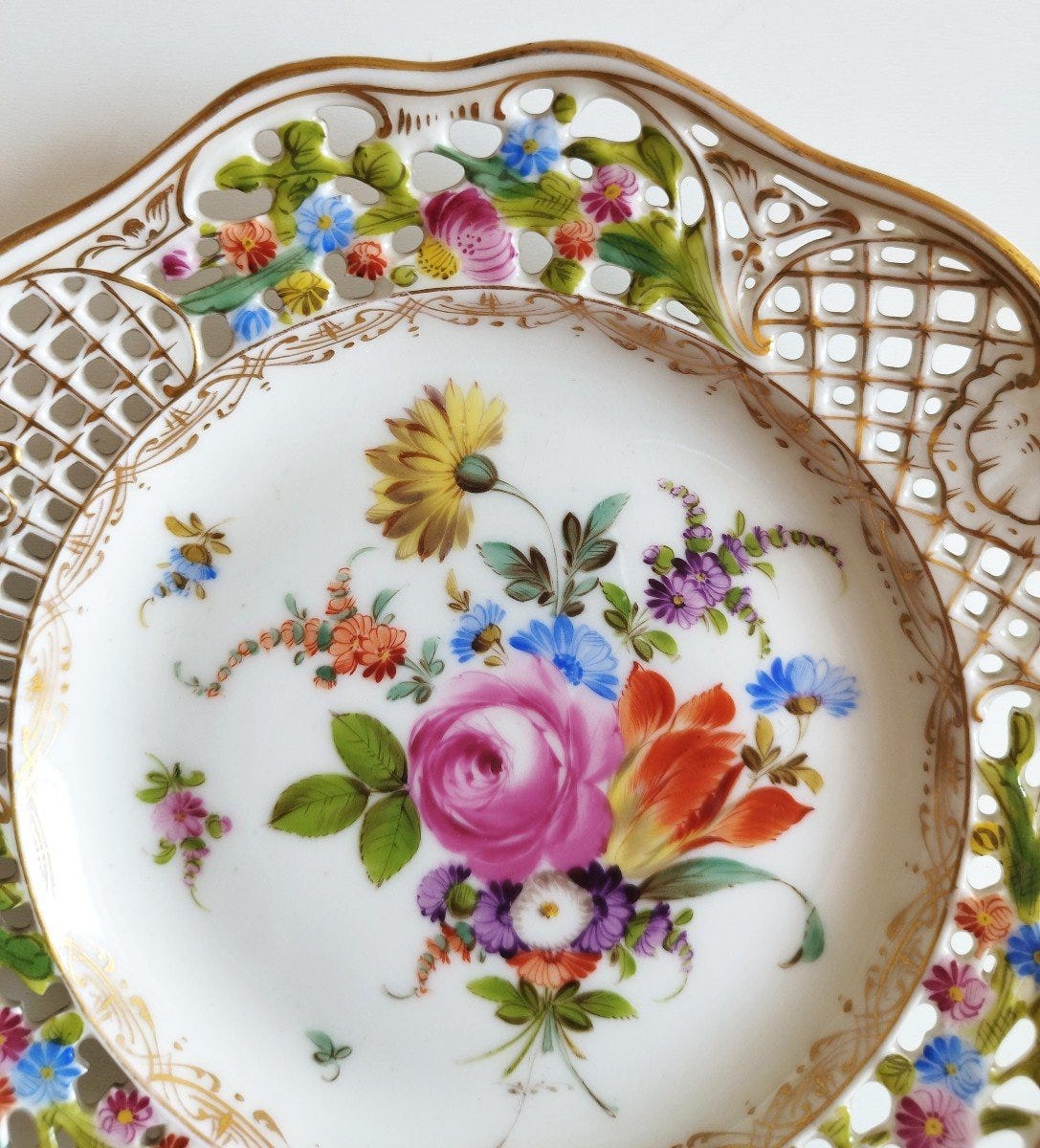
In painting the flow and line of the subject shape leads you through the piece. There are lots of rules about using an S curve or a C curve to design. They both give balance as well as make your eye follow a line through the subject rather than having a static non-flowing image. A single flower without stems or leaves in the middle of a plate would be lifeless—no movement. Your eye would lock in one place. Leaves, stems, and subordinate blooms along the curves create energy. Good designs lead your eye through the subject to the edge and back.
I began a January painting class while still packing Christmas away. The first session the teacher critiqued the complicated Dresden flower design I sketched. Her assessment: “No pathways. No connections to the center.”
“That’s it! That’s what’s wrong,” I thought to myself. “Not wrong with the plate. Wrong with Christmas.” Society lost the journey—the “before,” the waiting, the anticipating, the centering—and zoomed in on the day itself. So had I.
***
In the early 1890s, William Dean Howells published a little fable called “Christmas Every Day” in one of the most popular children’s magazines of the time, St. Nicholas. Once upon a time, the narrator explains, “there was a little girl who liked Christmas so much that she wanted it to be Christmas every day in the year.” She found a fairy to grant her wish, and she was delighted when Christmas came again on December 26, and December 27, and December 28:
After it had gone on about three or four months, the little girl, whenever she came into the room in the morning and saw those great ugly, lumpy stockings dangling at the fireplace, the disgusting presents around everywhere, used to sit down and burst out crying. In six months she was perfectly exhausted, she couldn’t even cry anymore. [By October] people didn’t carry presents around nicely anymore. They flung them over the fence or through the window, and instead of taking great pains to write “To dear Papa” or “Mama” or “Brother” or “Sister,” they used to write, “Take it, you horrid old thing!” and then go and bang it against the front door.
These days, by the time Christmas rolls around, it feels as though this is very nearly what we’ve had: Christmas every day, or some faint version of it, since catalogs start arriving at the end of summer. Its shape is gone. Every secularized holiday loses the context it had in the liturgical year. Christmas has lost Advent. We have lost the time of genuine anticipation—the time before, the waiting, the Old Testament longing.
All that’s left is more Christmas decorations. More lights. More food. More glitter. By the time Christmas arrives it feels like an afterthought, not a promise fulfilled.
***
Our adult children made the suggestion. Why not change the pattern? Why not look for chances to gather at other times? Summer? Thanksgiving? They were right. No one is the “keeper” of Christmas. It belongs to all of us. The next year we celebrated one of the best Thanksgivings in memory—together and focused back in the “picture”—not on the fiercer, wilder, frenzied burning of the long Yule season.
***
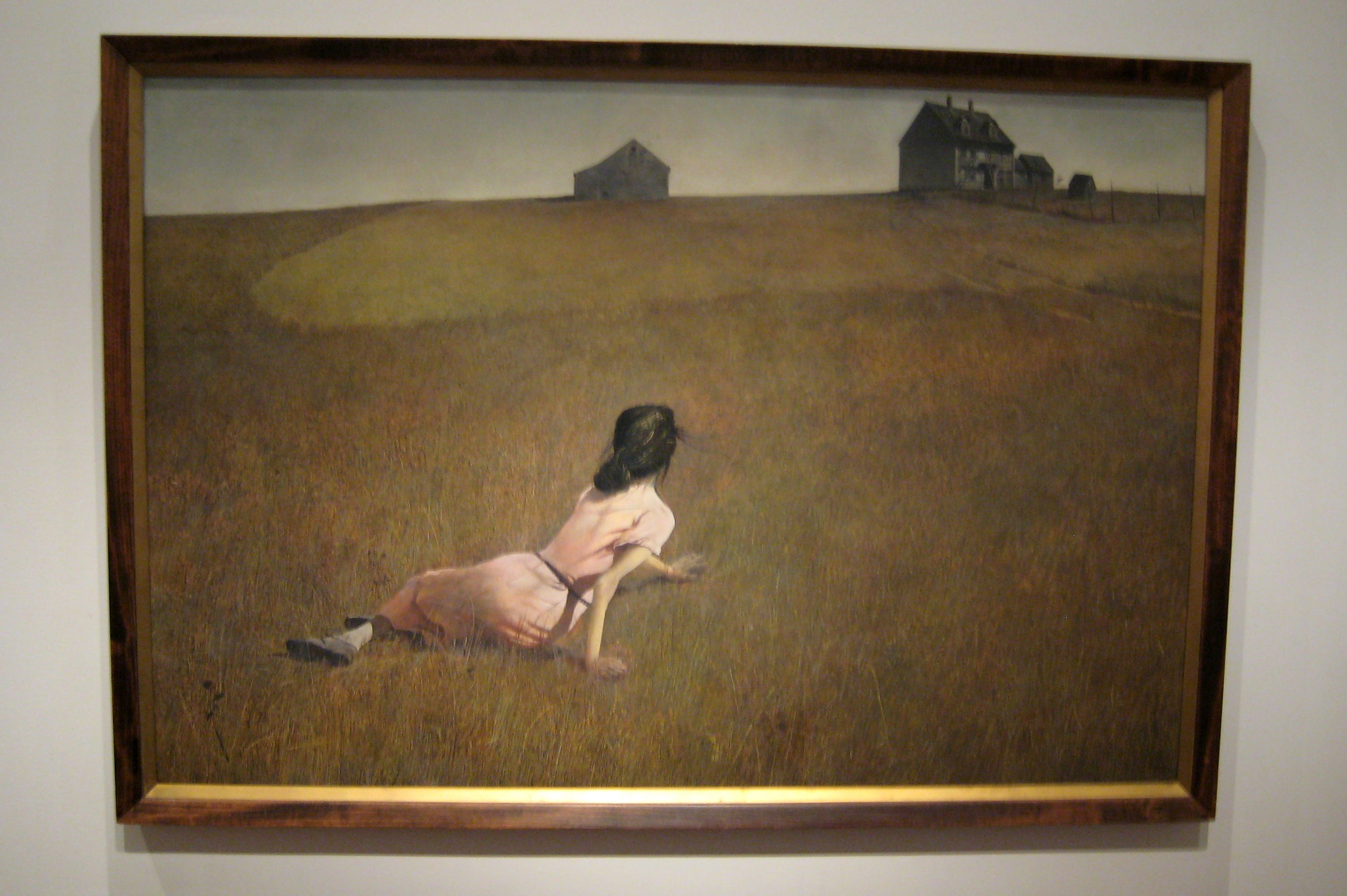
When painter Andrew Wyeth died in 2009 at 91, his death provoked diverse reactions. Many in the art world praised him as one of the most significant American artists of the 20th century. Plenty of others lumped him with Norman Rockwell as a mere illustrator, and dismissed his most famous painting, “Christina’s World,” as a “mandatory dorm room poster.”
Rob Storr, dean of the Yale University School of Art, said:
Wyeth was an anti-modern painter. He did paintings that never changed in a style that never changed. His image is one of stasis in a world that changed dramatically around him. It is in many ways a futile exercise, but he did it with great energy and conviction.
I like Wyeth. I like his patriotism, his sincerity, his New England roots. I also like his ability to have lived life out of contemporary time. He focused on what mattered to him, not what mattered to critics. As the painter Mark Rothko once put it, “Wyeth is about the pursuit of strangeness, but he is not whole, as Hopper is whole.”
I doubt Wyeth thought his work incomplete. His paintings have the quiet movement good design creates—to the edges and back to the center of interest. The world has changed. The principle hasn’t.
Christmas Eve is quieter now. My childhood memories are back. It is a time out of time. Last year the hours were unhurried, a gradual slow motion kind of day. Even the air felt different. I put the digital kitchen timer in the cupboard. My family was creating new traditions, new shapes, new memories, in new places—for an old story. A story of hope.
A story for the days after Christmas, not the days before.
I shall see him, but not now: I shall behold him, but not now.
—Numbers 24:17


