



The tongue is prone to lose the way, | Not so the pen, for in a letter | We have not better things to say, | But surely say them better.
—Ralph Waldo Emerson, “Life”, 1847
At age 93, Pablo Casals wrote,
For the past eighty years I have started each day in the same manner. I go to the piano, and I play two preludes and fugues of Bach. It is sort of a benediction on the house, but that’s not its only meaning. It is a rediscovery of the world in which I have the joy of being a part.
Morning routines. We all have them though parts change with age. Life with very small children creates one rhythm, teenagers another. Even with no one else to manage, launching the day requires a certain presence of mind. Jim begins each morning as he has for many years—breakfast followed by a spiritual reading and meditation.
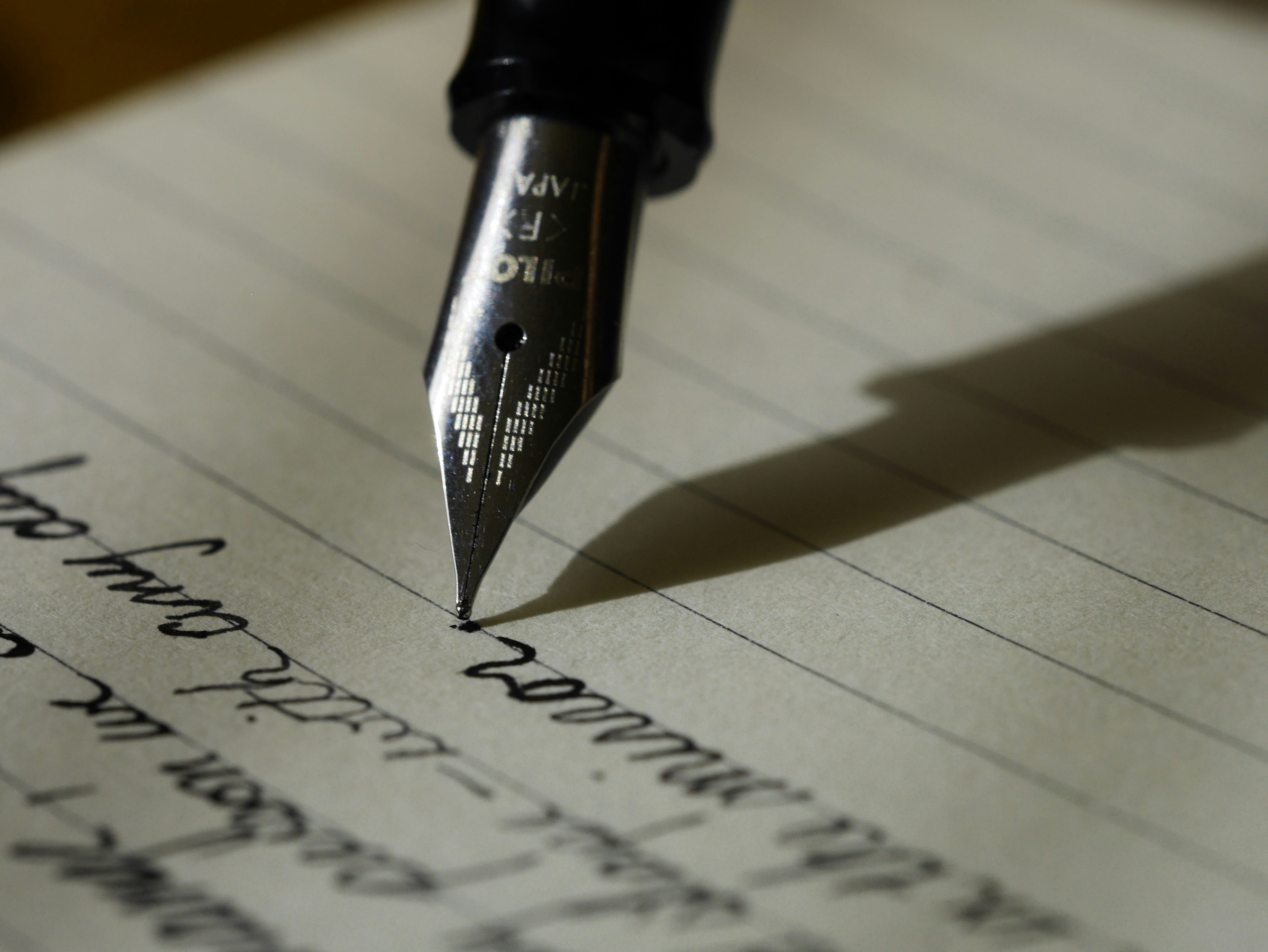
I begin by writing one letter… sometimes more. It is a habit I began as a young teacher. Hundreds of students passed through my classroom each year. Part of the fun was connecting with them, not just as students, but as people with lives filled with the joy and heartbreak that follow youth like twin shadows.
The end of a term or school year always brought a sense of loss as the community changed. Students moved on. So did teachers. It has been a recurring theme in my life. Always saying goodbye. People gone, like a turned kaleidoscope, but not forgotten. I began writing letters to not just former students, but to people who had moved in and out of my life. I wrote to encourage, to congratulate, to share, to remember, to continue conversations. I still do. Sometimes in the morning quiet, I open my address book at random and point. The names all remind me how lucky I have been in my encounter with the world. The letters are a kind of meditation.
***
Ereline McCord is an example. A dozen years ago, my sister and I began accompanying our father to his family reunions in Green City, Missouri, a tiny town (population 683) he left in 1939. The narrow road from Kansas City winds through Hamilton, the birthplace of retailer J. C. Penney. On a whim, we stopped at the Penney Mall, which is not a mall but a small building housing “Antiques, Collectibles, and Vintage,” according to the faded sign out front. Everything in northern Missouri is in decline, including Hamilton.
At the counter was a cheerful man in overalls and a plaid shirt. Not the owner, he said, but married to her. Since we were the only customers he visited with us while we shopped. A former science and math teacher, he retired to his farm while his wife ran the shop. “I’m just filling in today,” he said. “My wife’s under the weather a bit.”
Charmed by him and saddened by the decay creeping through the heartland, I wrote them both a thank-you note afterwards. A thank you for taking time to visit with strangers, for their neat-as-a-pin shop, for their stories. Since that first encounter, Mr. McCord has suffered two heart attacks. His wife reports he doesn’t come into town very often, but she is still minding the store.
Every year we stop. She takes our picture. We catch up. We find something to buy. She adds the purchases by hand, rechecks her work, and opens an enormous, ornate brass cash register to complete the transactions. She belongs to another age. Several times a year I post a letter to the address on her business card: “Penney Mall, Downtown Davis Street, Hamilton, Missouri 64644.” It is a chance to catch up on a town time forgot, and to remember the people who live there.
***
Evening is here for postal service. My adult children tell me my correspondence is almost the only first-class mail they receive. The delivery is so inconsequential one of them forgets his mailbox for days at a time. “There’s nothing but junk,” he shrugs.
The new communication landscape is electronic—characterized by speed rather than reflection. Often it is cryptic—144 characters. Sometimes speed matters. Sometimes it doesn’t.
I remember the old government highway safety slogan, “Speed kills.” In the early 1970s, as a result of the 1973 oil shock, the United States imposed new lower speed limits in an effort to save fuel. The first year, road fatalities dropped by 9,000 people. But what wasn’t taken into account was the cost of gas. Fewer people were driving. Speed can kill drivers. So can carelessness. Neglect. Inattention. The same can be said of relationships.
***
In my mid-20s, I worked a summer in Yellowstone National Park. Browsing one day in a second-hand store in Bozeman, Montana (while waiting for my laundry that was being beaten to death at the Laundromat next door), I discovered a special book. It is a letter collection by Sir Sydney Cockerell. In 1908, he became the director of the Fitzwilliam Museum in Cambridge, England. For the next three decades, he spent much of his time thinking about paintings, sculpture, and prints. His ability to extract these objects from rich Englishmen became legendary. He transformed the Fitzwilliam into the distinguished institution it is now.
Sometimes in the morning quiet, I open my address book at random and point. The names all remind me how lucky I have been in my encounter with the world.
He lived in a time when friends communicated by letter. He corresponded with whole bunches of interesting people. Letters poured in. George Bernard Shaw used him as a confidant. So did T.H. White. There were people of all sorts—a Benedictine nun with whom he corresponded for 46 years (each wrote the other about 750 letters); Walter Ivins, the keeper of prints at the Metropolitan Museum of Art; Katie Adams, a talented bookbinder. Many others.
The book, “The Best of Friends: Further Letters to Sydney Carlyle Cockerell,” contains hundreds of letters people wrote to him between 1900 and 1954 and a few of his replies. It’s a reminder of what communication can be when it is laced with affection, intelligence, humor, and wisdom. Even the most mundane and instrumental among them had a civilized air, or at least a courteous one. More than anything else, it’s the humanity of them that strikes me as so important.
***
Not long ago, I read a question to an advice columnist in the local paper. A parent wanted to know if it was alright after a birthday party for children to send a general email message along the lines, “Thanks for coming to my party and for all the neat presents.” The advisor suggested trying “to make it a little more specific” but allowed it was better than nothing. Really?
Letter writing is an art. Like other arts it connects people and leaves both the creator and receiver changed in some way. The letters I write, simple as they often are, are for me what playing Bach preludes were for Casals, or quiet meditation is for my husband. They celebrate the gift living is—the chance to create, to be, to do something with intention.
In the book “Joys and Sorrows,” Casals says, “The music is never the same for me, never. Each day it is something new, fantastic, and unbelievable.” Letter writing is like that. It is always new, always a privilege to think about others, always a chance to reconnect.
Though their topics are different, what I am saying at the core is “I miss seeing you. You are in my thoughts. You matter.”
Life rediscovered. Every day.


